 isospins
Feasibility around a real task
Describe the repeated work, its current process, the people affected, and the consequence of an error. Review sample information and constraints before choosing a model, platform, or architecture.
Assess feasibility, information needs, and technical choices to shape an AI engagement with a clear scope and a way to evaluate the work.
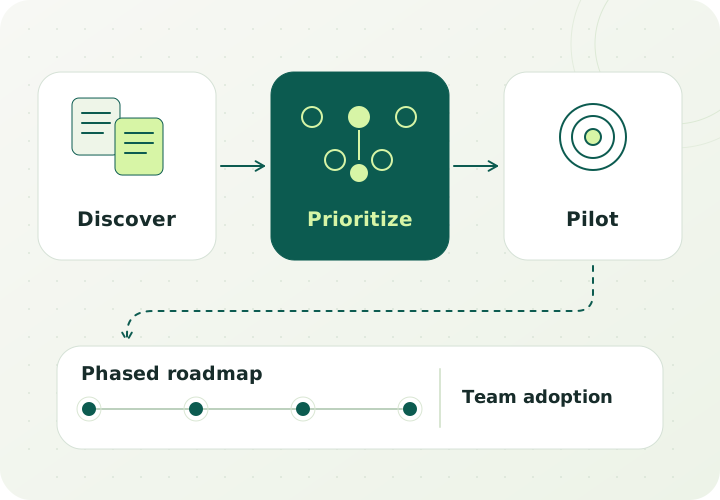
A business may know that a workflow is slow without knowing whether it needs AI, better data, or a simpler application. Our feasibility work examines that question, the information available, and the people responsible for the result. The output should explain what is worth testing and what needs to be ready first.
Explore all servicesDescribe the repeated work, its current process, the people affected, and the consequence of an error. Review sample information and constraints before choosing a model, platform, or architecture.
Compare an ordinary rules-based workflow, an existing software feature, and a custom AI approach where each is relevant. Include integration effort, review requirements, recurring costs, and maintenance in the comparison.
Define a representative task set and an acceptance process. A prototype should help decide whether to proceed, change the scope, improve the data, or stop; it should not assume a production rollout is already justified.
Bring one workflow owner, a description of the current process, approved examples, and the decision you need to make. A scoped feasibility review can produce an opportunity brief, options comparison, readiness gaps, and a proposed experiment with evaluation criteria.
Document the current baseline, assess whether the proposed output is usable and correct enough for the intended task, and review cost and ownership assumptions. Agree the criteria with the business owner before evaluating the experiment.
Start a conversation about your application, AI opportunity, or cloud environment.