 isospins
Virtual Patient Assistants
Scope symptom-check information gathering, appointment scheduling, and approved post-care guidance. Route clinical concerns to the care team and define clinician-reviewed content and escalation paths.
Explore healthcare applications and AI support for patient engagement, clinical information review, and operations. Define data access, integration, evaluation, and professional review around each workflow before implementation.
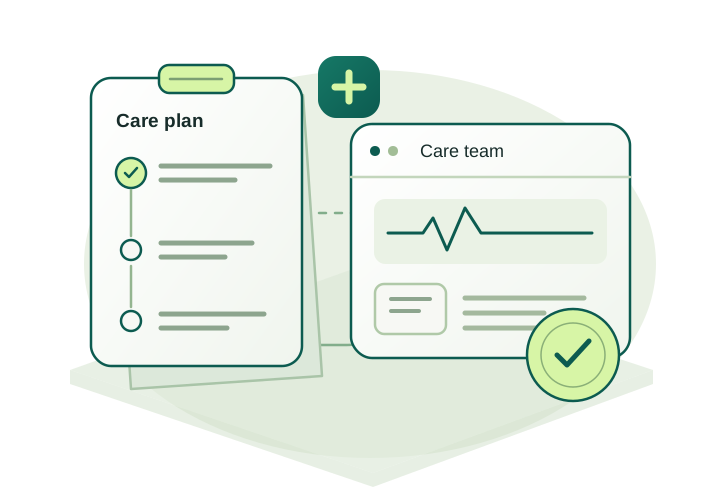
Illustrative engagement opportunities, scoped around the systems, data, and professional responsibilities involved.
Scope symptom-check information gathering, appointment scheduling, and approved post-care guidance. Route clinical concerns to the care team and define clinician-reviewed content and escalation paths.
Explore agentic AI to organize patient history, lab information, and research for qualified clinicians reviewing diagnostic and treatment-planning questions. Clinical interpretation and decisions remain with those professionals.
Assist scheduling, inventory coordination, and insurance administration through scoped applications and workflows. Assign permissions and staff approval points for consequential changes and eligibility-related decisions.
Research reviewed October 27, 2026. Recent standards, research, and platform developments connected to practical project decisions.
ASTP/ONC's 2026 Interoperability Standards Advisory brings together standards for clinical, research, public-health and administrative exchange. It also distinguishes emerging specifications that still need pilot experience: choosing a standard is only the start of proving an integration works.
Start a patient-assistant or research-data project with source-system mapping, terminology alignment, consent boundaries and integration testing. Give every generated answer a traceable connection to the records it is allowed to use.
The 2024 CMS interoperability rule has operational provisions applying in 2026 and API requirements generally beginning January 1, 2027 for impacted payers. These include FHIR-based information exchange and prior-authorization request and response workflows; this rule's prior-authorization provisions exclude drugs.
A scoped pilot could assemble required documents, identify missing information and track request status across existing systems. Keep coverage and clinical decisions with authorized reviewers, and confirm which payer-specific dates and requirements apply before setting the delivery plan.
In August 2026, FDA opened a discussion on how generative AI-enabled medical devices could be assessed before use and monitored afterward. The discussion paper explores risk assessment, evaluation and postmarket monitoring; it is not draft or final guidance and does not establish new policy.
Separate administrative assistance from functions that could influence diagnosis or treatment. For a proposed clinical product, define intended use, failure cases, clinical oversight, evaluation evidence and a monitoring plan with the appropriate clinical and regulatory specialists.
Source dates indicate publication or last update. Drafts, regional examples, and product announcements are identified in context. The project implications are Isospins’ recommendations for scoping an engagement.
An illustrative engagement to shape around your organization, systems, and priorities.
Discuss a first projectPrototype an appointment or intake workflow using synthetic information. Connect approved guidance to a staff review queue and test escalation before considering live integrations.
Start by mapping the workflow, its users, and the information that needs to move. Then identify a useful prototype, the evaluation criteria, and the responsibilities for implementation and operation.
Combine AI strategy, machine learning, generative AI, data engineering, and cloud integration around the needs of this industry.
Explore the full service portfolioExplore patient-facing experiences, staff tools, and application integrations as part of our wider healthcare and life-sciences practice.
Bring these questions to the first conversation. We can work through the unknowns together.
Start a conversationWhich EHR, payer or research systems hold the information, and what permissions govern each connection?
Is the proposed workflow administrative support, clinical decision support or a potential medical-device function?
Who reviews exceptions, and what evidence would demonstrate that the pilot improves the workflow safely?
Start a conversation about your application, AI opportunity, or cloud environment.