 isospins
Data Pipeline Design & Automation
Map source systems and automate repeatable ingestion and transformation. Define scheduling, dependencies, ownership, and recovery steps so the pipeline can be operated after launch.
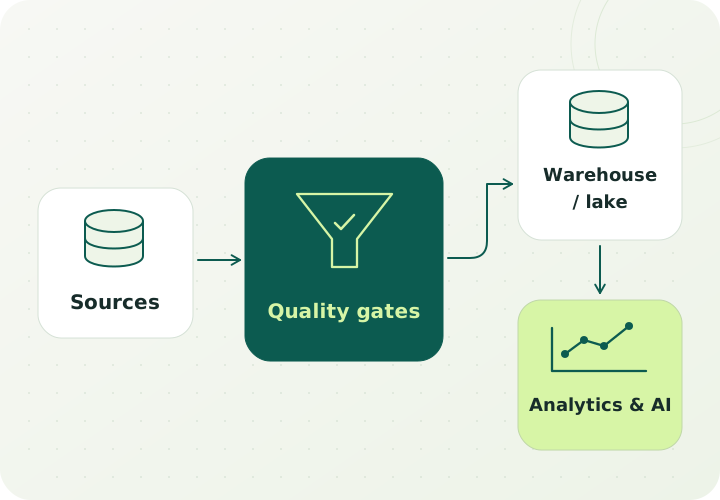
Build the data foundations behind analytics and AI. Plan and implement ETL/ELT pipelines, cloud warehouses, data lakes, and real-time or batch processing, with explicit ownership, quality checks, access requirements, and operational documentation.
Scope the right combination of capabilities for your organization, data, and intended outcome.
Map source systems and automate repeatable ingestion and transformation. Define scheduling, dependencies, ownership, and recovery steps so the pipeline can be operated after launch.
Choose ETL or ELT around the source, destination, and transformation requirements. Make schema changes, incremental loads, and reconciliation part of the implementation.
Model business-ready information for reporting and AI workloads. Plan access, performance, workload separation, and cost visibility around the teams using the warehouse.
Organize structured and unstructured data with cataloging, retention, and access requirements. Select storage and table patterns based on the consumers and processing needs.
Define quality rules and accountable data owners. Track freshness, completeness, validity, and lineage so downstream users can inspect whether information is fit for their task.
Use streaming or scheduled processing according to how quickly a decision needs new information. Plan late events, replay, deduplication, and failure recovery explicitly.
Research reviewed October 27, 2026. Recent standards, research, and platform developments connected to practical project decisions.
Amazon EMR's October 2026 release adds managed quality checks within Spark processing, including rules that can fail a job or route invalid records for inspection. Quality controls can be placed at ingestion, transformation, and publication steps.
Define the rules that matter to your application and the action each failure should trigger. Include exception handling and ownership in ETL/ELT work, alongside pipelines, warehouses, and data lakes.
Current Databricks pipeline guidance brings update history, quality results, lineage, resource usage, and streaming backlog into the operational view. A completed run is one signal; the condition and timeliness of the data also matter.
Set freshness and recovery targets for each batch or real-time workflow. Make delayed data, failed quality rules, and downstream dependencies visible to the team responsible for operating the pipeline.
Source dates indicate publication or last update. Drafts, regional examples, and product announcements are identified in context. The project implications are Isospins’ recommendations for scoping an engagement.
An illustrative engagement to shape around your organization, systems, and priorities.
Discuss a first projectSelect a recurring report or AI input with a known data problem. Trace it to the source, build a repeatable pipeline, and make quality failures visible to a named owner.
Build the data foundations behind analytics and AI. Plan and implement ETL/ELT pipelines, cloud warehouses, data lakes, and real-time or batch processing, with explicit ownership, quality checks, access requirements, and operational documentation.
Define the use case, relevant industry context, integrations, evaluation criteria, and operating responsibilities before implementation. Our consulting work connects strategy, engineering, adoption, and handover.
Find your industryBring these questions to the first conversation. We can work through the unknowns together.
Start a conversationWhich data products support the business workflow, and how fresh must each one be?
What should happen when data is missing, inconsistent, duplicated, or late?
Who owns the sources, quality rules, access permissions, and recovery process?
Start a conversation about your application, AI opportunity, or cloud environment.