 isospins
Education
Scope learning-path suggestions, approved learning resources, and student-support assistance. Educators review content, assessment implications, and consequential student decisions.
Explore AI and application opportunities across public services, learning, and energy operations. Define the users, information boundaries, evaluation criteria, and accountable human decisions for each setting.
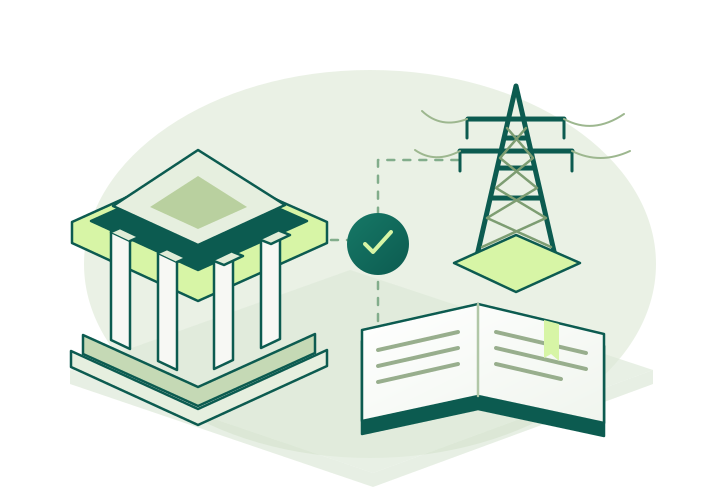
Illustrative engagement opportunities, scoped around the systems, data, and professional responsibilities involved.
Scope learning-path suggestions, approved learning resources, and student-support assistance. Educators review content, assessment implications, and consequential student decisions.
Explore demand forecasting, grid-performance analysis, and sustainability planning with available operational data. Qualified operators review recommendations before changes to operational systems.
Assist citizen inquiries, case organization, and infrastructure-planning analysis. Keep eligibility and other consequential public-service decisions with authorized staff, with review and escalation steps.
Research reviewed October 27, 2026. Recent standards, research, and platform developments connected to practical project decisions.
The OECD's 2026 Digital Education Outlook distinguishes improved task performance from lasting learning. It finds that educational AI needs an intentional teaching purpose and highlights teacher involvement, appropriate design, and evaluation of learning outcomes.
Co-design a teacher assistant or bounded tutoring pilot with educators. Align it to a curriculum, protect learner information, retain teacher review, and assess understanding through activities completed without AI assistance.
The European Commission announced AI.grids in June 2026 to develop models for energy-grid management and planning. A parallel initiative addresses sustainable data-centre integration, linking AI adoption with electricity-system capacity and the operational realities of digital infrastructure.
Consider a forecasting or asset-inspection pilot with a defined operating boundary. Track forecast error, data quality, and computing demand, and keep dispatch or safety-related operational decisions under qualified human control.
An April 2026 U.S. GAO review found that selected federal agencies were not systematically collecting lessons from AI acquisitions. It identified opportunities to share practices covering areas such as testing requirements and data rights, alongside challenges understanding costs and evaluating suppliers.
Define a service outcome, representative evaluation set, data-access boundary, and full lifecycle cost before procurement. Capture lessons from a bounded staff knowledge or document-triage pilot, with accountable staff reviewing decisions that affect people.
Source dates indicate publication or last update. Drafts, regional examples, and product announcements are identified in context. The project implications are Isospins’ recommendations for scoping an engagement.
An illustrative engagement to shape around your organization, systems, and priorities.
Discuss a first projectChoose a staff knowledge assistant, an approved learning-resource guide, or an energy forecasting study. Define the information boundaries and responsible decision-maker for that specific setting.
Start by mapping the workflow, its users, and the information that needs to move. Then identify a useful prototype, the evaluation criteria, and the responsibilities for implementation and operation.
Combine AI strategy, machine learning, generative AI, data engineering, and cloud integration around the needs of this industry.
Explore the full service portfolioBring these questions to the first conversation. We can work through the unknowns together.
Start a conversationWhat public-service outcome, learning objective, or energy-operating metric should improve—and how will it be measured?
Which records may the system access, and what retention, identity, accessibility, or procurement requirements apply to this organization?
Who reviews consequential recommendations, handles exceptions, and decides whether the pilot is ready to expand?
Start a conversation about your application, AI opportunity, or cloud environment.