 isospins
Personal Shopping Agents
Explore product recommendations and guided shopping using relevant catalog information and permitted customer context. Define recommendation criteria and boundaries for any agentic actions.
Explore AI experiences for product discovery, customer support, and merchandising operations. Connect catalog, order, and inventory information to focused applications, with clear business rules and staff ownership.
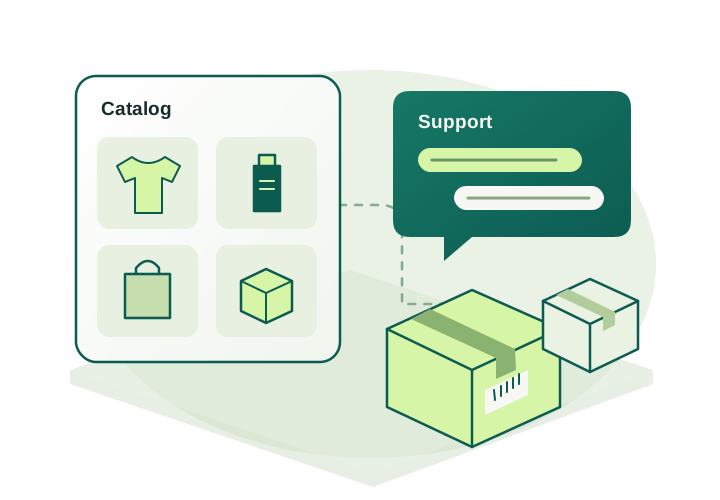
Illustrative engagement opportunities, scoped around the systems, data, and professional responsibilities involved.
Explore product recommendations and guided shopping using relevant catalog information and permitted customer context. Define recommendation criteria and boundaries for any agentic actions.
Assist order inquiries and return requests using approved policies and system access. Provide staff handoffs and approval steps for exceptions, refunds, and account changes.
Assess demand, seasonality, and stock information to propose inventory or pricing changes. Evaluate recommendations against business rules and define approval requirements before operational use.
Research reviewed October 27, 2026. Recent standards, research, and platform developments connected to practical project decisions.
Google's May 2026 commerce announcements expanded its UCP plans to a cart spanning retailers and services such as Search and Gemini. The announced flow supports checkout through Google Pay or transfer to a merchant's site, while the retailer remains the merchant of record.
Assess channel eligibility and commerce APIs before a pilot. Keep price, stock, payment authorization, and order confirmation in trusted transaction systems, and measure completed orders alongside failed or abandoned handoffs.
UCP's March 2026 update introduced optional capabilities for carts, catalog retrieval, and identity linking. These capabilities allow integrated agents to obtain current variants, inventory, and pricing, and support authenticated loyalty benefits rather than relying only on static product descriptions.
Start with catalog quality and reliable inventory feeds. Define refresh rules, resolve conflicting product attributes, test member pricing, and require an authoritative price check before a customer confirms a purchase.
Google Cloud introduced Gemini Enterprise for Customer Experience in January 2026 to connect shopping and support workflows. Its announced capabilities combine customer context with backend tools, reflecting a move toward service agents that can help resolve a task as well as answer a question.
Pilot one bounded workflow, such as order-status assistance or return eligibility. Connect approved policies and order data, verify customer identity, and route exceptions or refunds above an agreed limit to staff.
Source dates indicate publication or last update. Drafts, regional examples, and product announcements are identified in context. The project implications are Isospins’ recommendations for scoping an engagement.
An illustrative engagement to shape around your organization, systems, and priorities.
Discuss a first projectPrototype guided product discovery using current catalog facts and approved policies. Keep purchases, refunds, and exceptional requests behind the agreed commerce controls and staff handoffs.
Start by mapping the workflow, its users, and the information that needs to move. Then identify a useful prototype, the evaluation criteria, and the responsibilities for implementation and operation.
Combine AI strategy, machine learning, generative AI, data engineering, and cloud integration around the needs of this industry.
Explore the full service portfolioBring these questions to the first conversation. We can work through the unknowns together.
Start a conversationWhich product, inventory, price, and order systems can provide authoritative data to the experience?
Which actions need customer confirmation or staff approval, and how will disputed actions be traced?
Will the pilot be judged on conversion, successful resolutions, customer satisfaction, or support cost—and what is the current baseline?
Start a conversation about your application, AI opportunity, or cloud environment.