 isospins
Multi-Cloud AI Deployment (AWS, Azure, Google Cloud)
Assess AWS, Azure, and Google Cloud against workload and organizational requirements. Use multicloud where the benefits justify the integration, security, and operating complexity.
Connect AI applications, APIs, and model hosting across AWS, Azure, and Google Cloud. Scope multicloud architecture, platform integration, security and compliance requirements, operational responsibilities, performance, and cost against the needs of the application.
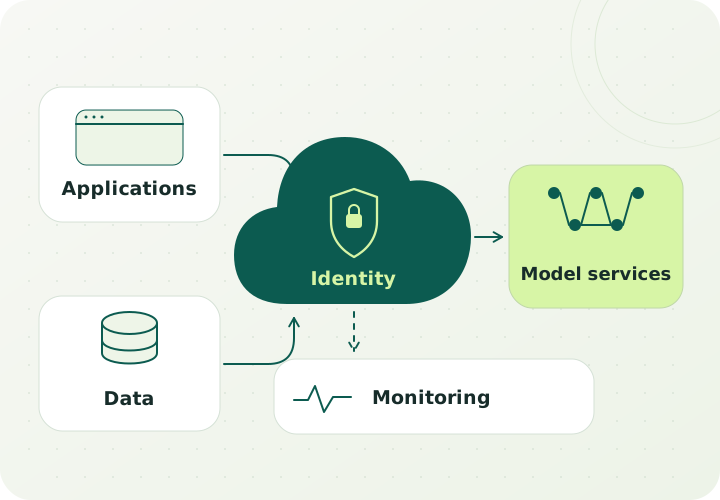
Scope the right combination of capabilities for your organization, data, and intended outcome.
Assess AWS, Azure, and Google Cloud against workload and organizational requirements. Use multicloud where the benefits justify the integration, security, and operating complexity.
Connect model platforms and business systems through defined APIs and data contracts. Review authentication, regional availability, quotas, failure behavior, and change management.
Plan online or batch inference, versioning, capacity, and rollback. Define availability and response-time targets that reflect the application and its users.
Map identity, secrets, networking, logging, and applicable project requirements. Produce an implementation and evidence plan that the organization's security and compliance owners can review.
Build AI-enabled application workflows using appropriate managed services and integration patterns. Keep tool permissions and human approval steps aligned with the business process.
Measure the workload before tuning it. Compare model choice, caching, batching, capacity, and observability against quality, response-time, and cost requirements.
Research reviewed October 27, 2026. Recent standards, research, and platform developments connected to practical project decisions.
AWS's April 2026 Interconnect release introduced managed private connectivity with Google Cloud as its first launch partner. This adds a network option for AI applications whose information and services reside in different cloud environments.
Compare data location, transfer costs, latency, identity, and failure handling before distributing the workload. Verify the available cloud pair, region, and service capabilities for the proposed architecture.
Google's October 2026 Agent Compute Engine design separates tool execution, runtime identity, credentials, and network reachability. Its 2026 IAM updates also distinguish agent identities and access policies, highlighting infrastructure needs beyond a hosted model endpoint.
Scope where agent code runs, which credentials it receives, what tools it can reach, and how actions are audited. Check release maturity and required support before choosing platform-specific controls.
Source dates indicate publication or last update. Drafts, regional examples, and product announcements are identified in context. The project implications are Isospins’ recommendations for scoping an engagement.
An illustrative engagement to shape around your organization, systems, and priorities.
Discuss a first projectIntegrate a bounded assistant or model endpoint with a non-production application. Exercise identity, tool permissions, failures, monitoring, and cost reporting before proposing production access.
Connect AI applications, APIs, and model hosting across AWS, Azure, and Google Cloud. Scope multicloud architecture, platform integration, security and compliance requirements, operational responsibilities, performance, and cost against the needs of the application.
Define the use case, relevant industry context, integrations, evaluation criteria, and operating responsibilities before implementation. Our consulting work connects strategy, engineering, adoption, and handover.
Find your industryGoogle introduced Gemini Enterprise Agent Platform in April 2026 as the evolution of Vertex AI. Read Google’s announcement. Platform choices depend on the workload, access, regional availability, and project requirements.
Bring these questions to the first conversation. We can work through the unknowns together.
Start a conversationWhere do the application, models, and data need to run, and what makes each cloud boundary necessary?
Which model APIs, hosting controls, identities, and tool permissions must the integration support?
What latency, cost, monitoring, recovery, and operational ownership requirements will guide the platform choice?
Start a conversation about your application, AI opportunity, or cloud environment.