 isospins
AI readiness and strategy
Prioritize opportunities and define the evidence needed for a first investment.
Start with a bounded task that a team understands. A focused problem makes it easier to decide what information is needed, how to evaluate the output, and where a person should remain involved.
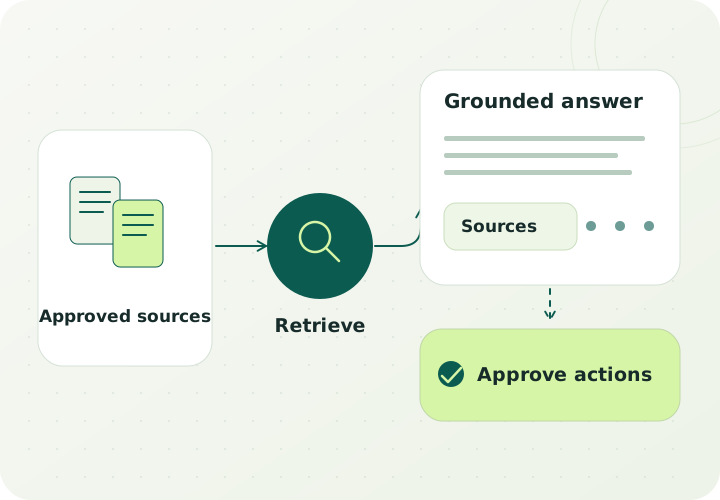
Describe one workflow and the assistance you want to provide. Finding an internal policy, organizing a set of documents, and drafting a summary are different tasks. Each needs its own examples and evaluation criteria.
Identify the material the system can use, whether it is appropriate for the task, and who is allowed to access it. Plan how information will be supplied, updated, and removed as part of the application design.
Decide what the system should do when it lacks enough information. Make the review step explicit wherever output needs to be checked before action. A source reference can help a user inspect the underlying material, but the workflow still needs clear responsibility.
Use examples that reflect the intended task, including incomplete inputs and ambiguous requests. Record expected behavior, assess the outputs, and use the findings to decide whether the concept deserves further development.
A prototype is a way to learn. Compare its behavior with the current workflow and the agreed criteria. The next step might be refinement, a small implementation, a different approach, or choosing conventional automation.
Start a conversation about your application, AI opportunity, or cloud environment.