 isospins
Healthcare application development
Explore patient-facing experiences, staff tools, and connected application workflows.
A useful healthcare application begins with a clear view of the work. Before choosing features, map the people, tasks, and handoffs that the application needs to support.
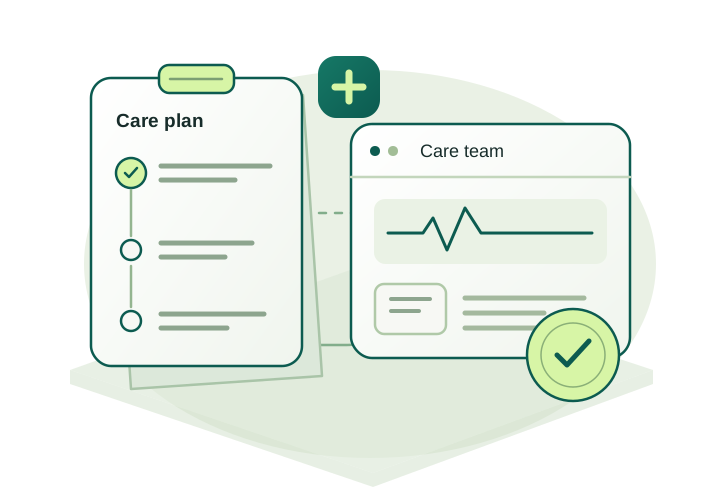
List the people involved and the action each person needs to take. A patient submitting information, a staff member reviewing it, and a coordinator arranging a next step have different needs. Treat those as distinct experiences.
Look for duplicate entry, missing information, unclear ownership, and handoffs that depend on someone remembering to act. Describe the problem in concrete terms before deciding whether a new application is the answer.
Map what comes in, where it goes, who can access it, and how long it needs to be retained. Identify existing systems and the interfaces available. These details shape the integration and data-handling scope.
Choose a small, complete workflow that can be reviewed by the people who will use it. A first release should make a defined task clearer or easier, with the necessary boundaries and operational responsibilities understood.
Agree on practical evaluation criteria before implementation. These might include task completion, staff feedback, the number of handoffs, or time spent on a defined administrative process. Establish a baseline rather than assuming an improvement.
The output is a workflow map, prioritized requirements, integration questions, and a first-release scope. That gives design and engineering a shared starting point.
Start a conversation about your application, AI opportunity, or cloud environment.