 isospins
Journeys and decision points
Map the user's goal, the information they can access, the steps they take, and where a result must be checked. Include exceptional cases and the people who will support the application.
Design application experiences and model workflows around specific users, from NLP and computer vision to generative AI and professional-review interfaces.
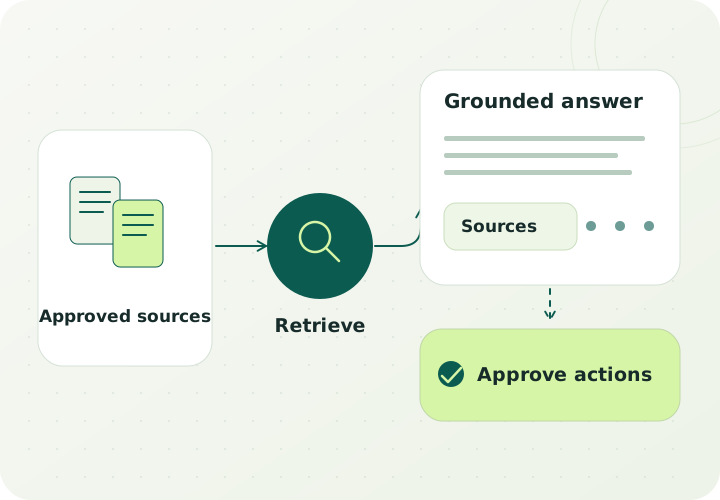
An AI application needs more than a prompt box. Users need to understand the task, inspect relevant evidence, correct errors, and know when a person must take over. We connect interface design to information access, model behavior, and the workflow around the application.
Explore all servicesMap the user's goal, the information they can access, the steps they take, and where a result must be checked. Include exceptional cases and the people who will support the application.
Design source references, review queues, correction paths, empty states, and escalation. Make consequential actions explicit and distinguish a draft or suggestion from an approved business record.
Pair interface concepts with data flows, evaluation tasks, permissions, and integration assumptions. Review those together so the design and implementation scope describe the same experience.
Choose one user journey, such as a staff member reviewing extracted document fields. A first design engagement can produce a workflow map, clickable interface prototype, key error and review states, and an engineering brief with unresolved assumptions.
Ask representative users to complete realistic tasks, identify the source of an answer, correct a mistaken result, and recover from an unavailable service. Record where they misunderstand the interface or cannot complete the workflow.
Start a conversation about your application, AI opportunity, or cloud environment.